I've been hosting dinner parties since my twenties and I've learned the hard way that the people who pull it off well are not the people who try the hardest. The ones who try the hardest end up sweaty and snippy by 9pm and don't actually enjoy their own party. The ones who pull it off do less, plan better, and somehow seem to be having more fun than anyone.
Here's what I've picked up.
Pick a menu you've made before
The single biggest mistake people make is debuting a recipe at a dinner party. Don't. Make something you've cooked at least three times. The party isn't the place to test a new technique. Use a tested menu and put your creative energy into the table, the wine pairings, or the playlist instead.
Bonus rule: at least half the menu should be either room temperature or made-ahead. If you're actively cooking three things while guests arrive, you've already lost.
Prep more than you think
The day-of cooking should be the easy stuff. Reheat, plate, garnish. Anything that requires real attention should happen the day before. Sauces, dressings, marinades, the dessert if it's anything other than ice cream.
I always make a written prep list the day before. Sounds intense, isn't. Just a list of "what needs to happen between 4pm and 7pm" so I'm not standing in the kitchen at 6:45 trying to remember what's next.
Set the table early
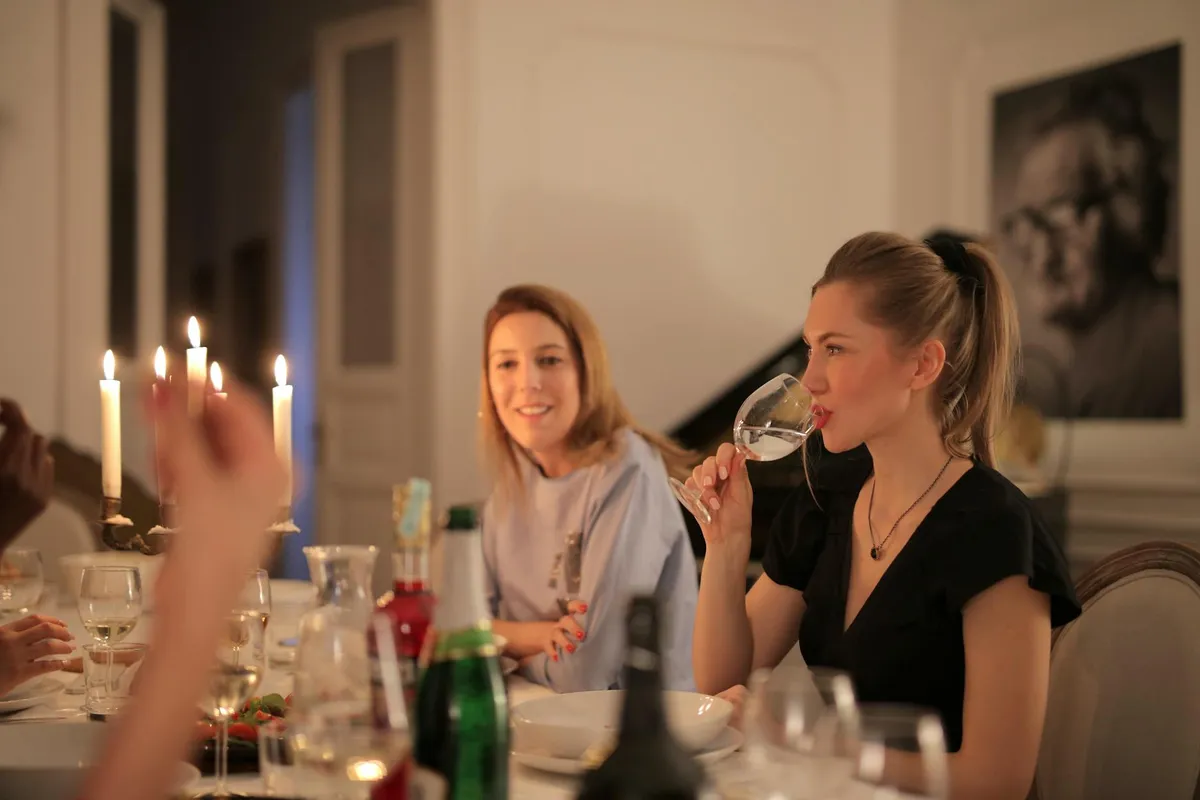
Three hours before guests arrive. Earlier if you can. Setting the table is a calm task that you don't want to do under pressure. Plus once it's done, you can step back and see what the room looks like, adjust the lighting, decide if the candles need to be lit. Late-table-setting is a stress trap.
Have a drink ready when people walk in
The first five minutes of a party set the mood. If guests arrive and have to wait for you to finish something in the kitchen, the energy starts low. If you greet them, hand them a drink, and gesture them toward food within 90 seconds, the energy starts high. Pre-pour the welcome drink. Have one bottle of wine open and ready.
Don't plate everything
Family-style serving is your friend. It looks generous, it's less work, and it gives the table something to interact with. Restaurant-style plating for six guests is a labor disaster and the food gets cold while you finish the last plate. Serve big platters in the middle, let people serve themselves.
Time your courses to the conversation
Don't bring out the next course the second the previous plate is empty. Wait. Let the conversation breathe. Let people refill drinks. The pacing of the meal is part of the meal — too fast and people feel rushed; too slow and they get bored. Listen to the room and time accordingly.
Have a clean-as-you-go partner
Either ask one trusted friend to be your kitchen helper for the night, or set up so that minimal cleanup happens during the party. Pre-rinsed dishes can pile in the sink — no one cares. Just get them out of sight. Deep cleaning happens tomorrow.
Sit down and eat
Maybe the most important rule. The host has to actually sit down and eat the food they made. If you're standing the whole time, refilling things and clearing plates and answering questions about the recipe, you're not at the party. You're working at the party. That's a different experience and not the one you wanted.
Sit down. Eat. Drink the wine. Be in the conversation.
End the night before everyone's tired
The instinct is always to keep going. Coffee, dessert, just one more bottle. But the dinner party that ends with everyone wishing it had been longer is way better than the one that ends with people checking their phones and looking for the bathroom for the fourth time.
I aim for three hours from when people arrive to when the dessert plates come out. Beyond that you're working against the room. End on a high note, hug everyone goodbye, and clean up tomorrow.
The biggest thing
The food doesn't have to be perfect. Nobody at the table cares as much about the food as you do. They care about being together, the wine, the conversation, the room feeling warm. Get those right and the food can be lasagna and they'll talk about the night for a week. Get those wrong and the most beautiful coq au vin in the world can't save it.
Hosting is mostly about how the room feels. Plan for the feeling, not the food.