
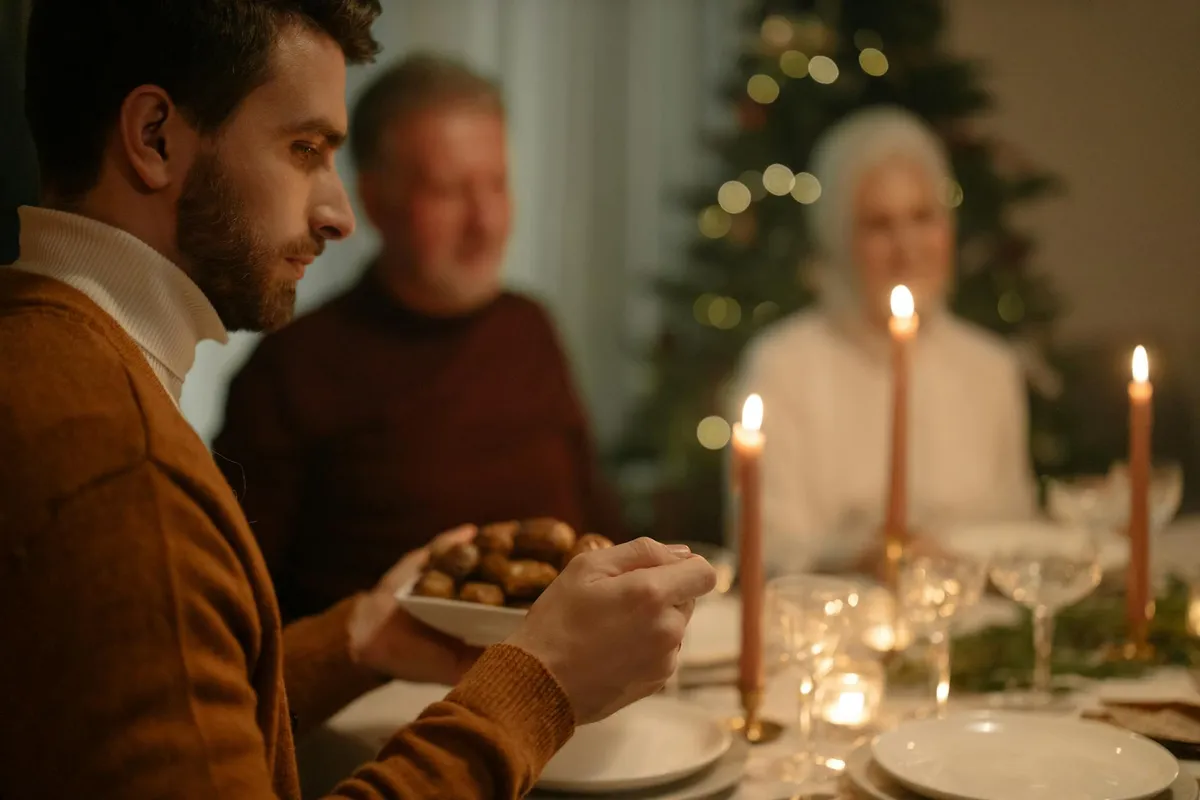
I've been the Christmas-dinner host in my family for nine years and I have made every mistake there is to make. I've been crying in the kitchen at 4pm. I've served undercooked turkey. I've had grandparents wait two hours for food because I underestimated the timing. I've also figured out how to do this without losing my mind, and the difference between the bad years and the good years is shockingly simple.
Here's the playbook I now use.
Two weeks before
The single most important Christmas decision is the menu, made early. Don't agonize over it. Pick something traditional enough that nobody will complain, but make it ONE menu and commit. Don't decide on the 22nd that you're going to pivot from prime rib to lamb. The pivot is where the chaos lives.
Write down the menu. Make a grocery list. Order anything that needs ordering (turkey, special meats, anything you have to source).
One week before
This is when you start cleaning. Not the deep clean — just the surface clean. Vacuum, dust, clean the bathroom thoroughly. Christmas day cleaning is not a thing that should happen.
Buy or pull out everything you need: serving platters, tablecloths, candles, glassware. Make sure you have enough of everything for the actual headcount. Borrow what you don't have.
Three days before
Grocery shopping. All of it. Don't wait until the 23rd to get the cranberries. The 23rd is chaos at every store and you'll be rage-driving home.
Set the table. Yes, three days before. The table is set. Move on. If the table is somehow needed for something else in the meantime (a project, dinner the night before), set it after that and at least have the dishes and glasses out and counted.
Two days before
Cook anything that can be cooked ahead. Cranberry sauce. Mashed potato base. Pie crusts. Salad dressings. Stocks for sauces. Anything that holds for two days, make it now.
The day-of cooking should be the active stuff only — the turkey, the gravy, the sides that need last-minute attention. Everything else is reheating or assembly.
The day before
Final prep. Vegetables peeled and chopped, kept in water in the fridge. Stuffing assembled, ready to bake. Wine bought, opened to breathe if needed. Floors mopped one last time.
Most importantly: get to bed early. Christmas day starts early and the last thing you want is to be exhausted before guests arrive.
Christmas morning
Don't over-schedule the morning. If you have kids, the morning is for them. If you don't, the morning is for coffee and slowness. Don't start cooking at 8am — there's no need. The active cooking starts about 4 hours before dinner is served.
If dinner is at 6pm, start at 2pm. Have a written timeline taped to the kitchen wall: 2:00 turkey in oven, 4:00 sides start, 5:30 plating, 6:00 sit down. The timeline is the most important document in the house that day.
The hard rules I now follow
1. One showpiece dish, everything else simple
The turkey is the showpiece. Everything else is supporting. Don't try to make three impressive dishes. Make one impressive thing and make everything else be reliable, easy, well-executed classics. Mashed potatoes don't need to be fancy. Roasted carrots don't need to be fancy.
2. Buy at least two things instead of making them
Bread from the good bakery. Pie from a real pie shop. The cheese plate from the deli counter. Outsourcing 2-3 things saves hours. Nobody knows you didn't make the pie unless you tell them. Don't tell them.
3. Set the timing for the food, not the family
If dinner is at 6, dinner is at 6. The relatives who show up late get cold food. The brother who's never on time can have the leftovers. The food rules the schedule. The schedule does not bend to anyone's late arrival.
4. Delegate before guests offer
Tell people in advance: "Mom, can you bring the appetizers?" "Mike, can you bring the wine?" "Aunt Carol, can you bring dessert?" If you wait until they offer at the door, the answer is always "you don't need to bring anything!" and then you're doing it all. Delegate before the holiday begins.
5. Have a designated drink-and-snack station for guests
Guests need something to do with their hands when they arrive. A drink station with bottles, glasses, ice, and a small snack tray gives them an immediate destination. They self-serve, you don't have to play bartender, and they have something to do while you finish in the kitchen.
The thing that changed everything
The single biggest shift in my Christmas hosting was accepting that the day doesn't have to be perfect. Once I gave myself permission for things to be slightly imperfect — the turkey is a little dry, the gravy could use more salt, the centerpiece tipped over at one point — the whole day got infinitely better. Because I wasn't trying to control the uncontrollable.
The family doesn't remember whether the gravy was perfectly seasoned. They remember the laughter at the table, the second glass of wine, the toast someone made, the moment everyone went outside to look at the snow. The food is the setting; the people are the event.
Plan for the people. The food just has to be edible.
One last thing
If you're hosting and reading this and feeling overwhelmed, the most important thing I can tell you: you're going to be fine. The day will happen. The food will get on the table. The people will eat it and love you for it. The Pinterest version of Christmas is fake. Your real Christmas — with its slightly burnt rolls and the relative who drank too much and the kid who threw a tantrum about pie crust — is the one your family will remember warmly. Don't overthink it.
Light a candle. Pour yourself a drink. Get the bird in the oven. The rest is just love and timing.